

No products in the cart.
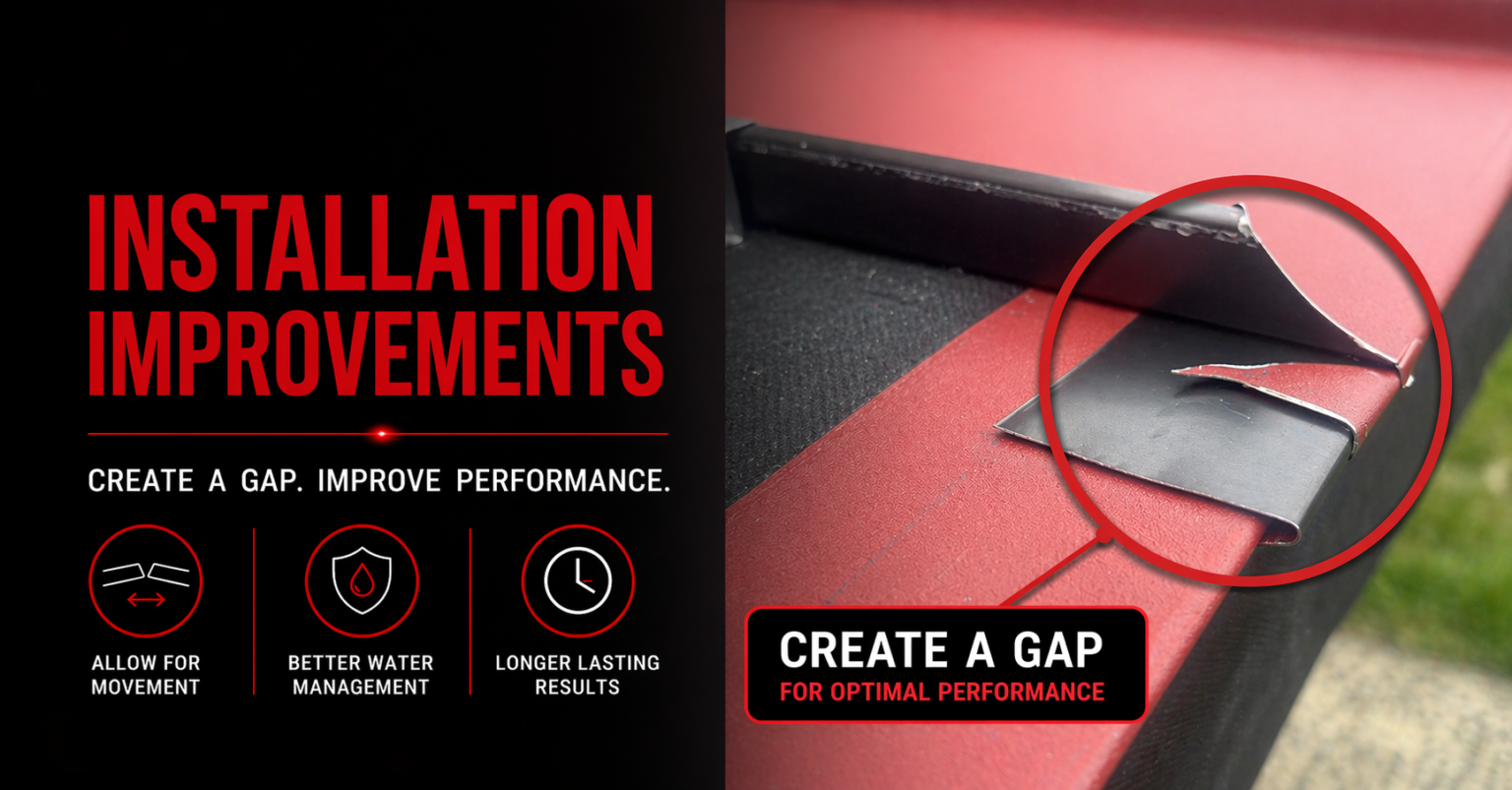
Every metal roofer has their methods for installing standing seam panels. Surprisingly to some, there are many ways to achieve similar results, and there are many variables that may cause someone to prefer one method over another. The quick tips in this blog entry are meant to give thoughts on improving the install process to allow for expansion and contraction as well as looking at a drip edge style that will keep the façade drier and cleaner.
Create space for expansion/contraction on your eaves hem
If you are wrapping the hemmed panel around the drip edge, you should be leaving a small gap between the hemmed panel and the drip edge. This can be achieved by using a scrap piece of sheet metal that is hemmed to become a “spacer” as you move through your installation.
Why this matters?
When metal cools, it will contract (shrink) and pull towards the drip edge. If there was no space left, the panel will pull against the drip edge metal and can cause buckling, increased oil canning, and/or loosening of fasteners.


Two tools that make installation easy:


Conclusion:
Creating this gap is simple and is important. This is achievable if you are hemming panels on the ground or if you are finishing the panels up on the roof. Give this a shot a feel proud that you are improving your installation methods and providing a better looking and longer lasting product for your customers.
European Drip Edge Style
Majority of metal roof installers in the USA are buying prefabricated trim and drip edge. The same general shape is used for drip edge in the USA. However, the German style drip edge is slightly different! The finishing kick-out isn’t bend out away from the exterior wall, but BENT INWARD. The concept of making this bend towards the wall is so that the edge metal gets additional spacing from the exterior wall and water will shed directly off of the material rather than slow down and travel around the kickout potentially ending up on the wall.

Details Matter:
Details are what separate you from the “metal roofer” down the street who will disappear when his installations start failing. Focus on small techniques that improve your installations and you will be surprised how much there is to learn. Over time, you can build the confidence to bid on higher end jobs and be known in your area as the “craftsman” and not just another metal roofer.
About Us
John Stortz & Son, Inc. was founded in 1853 by the original John Stortz in Philadelphia. Currently headed by Tom, Jeff, and Sam, along with their dad and uncle; Stortz Tools continues to serve the tool industry quality specialty hand tools after over 170 years.
Related Posts


Follow us on instagram
#STORTZTOOLS

