

No products in the cart.
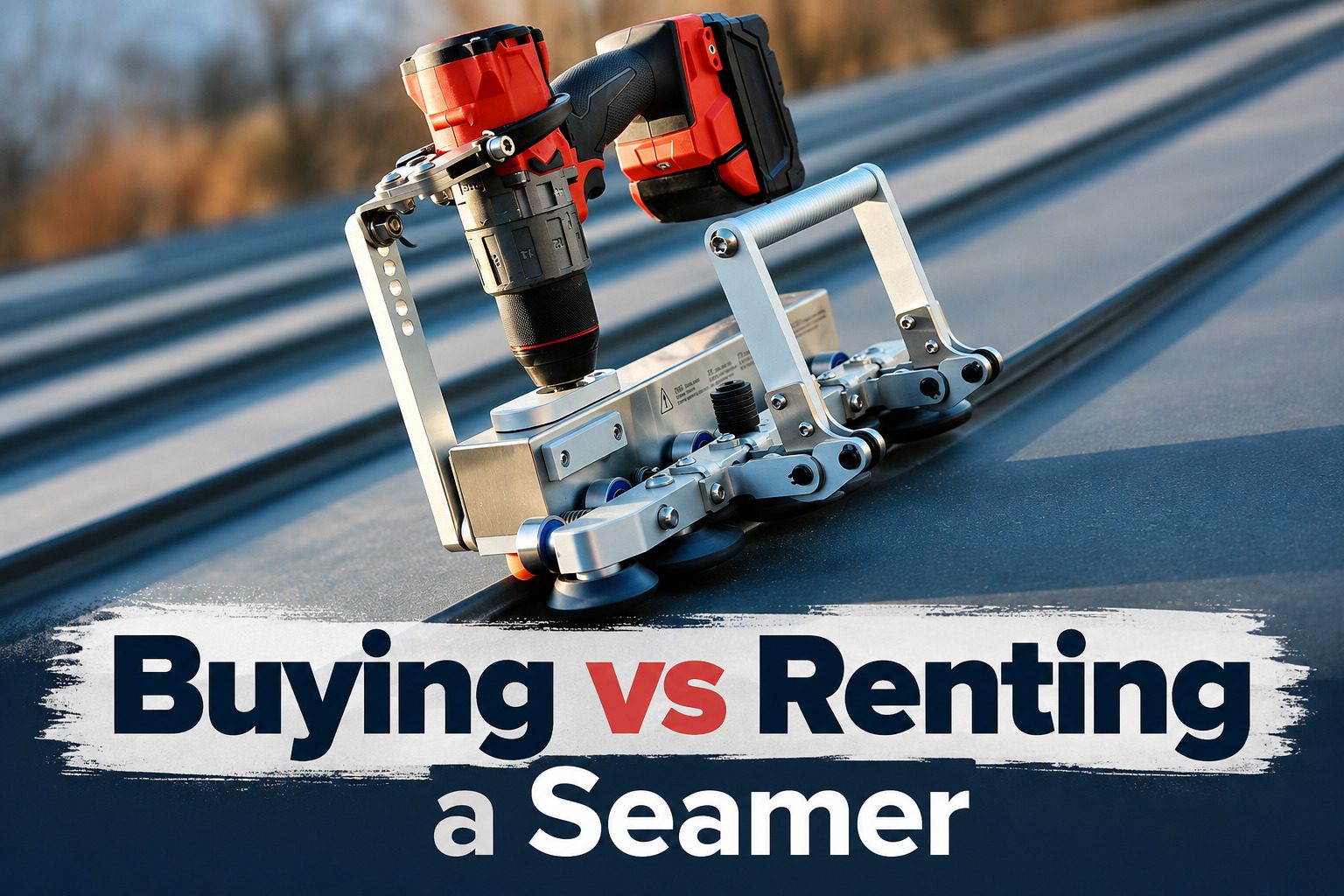
Buying vs Renting a Standing Seam Roof Seamer?
Mechanically locked standing seam panels can be frustrating to roofers that are used to working with snap lock systems. The idea of needing to invest in tooling to close seams is different that just popping seams together. However, once you discover that mechanical lock systems allow you to be more creative with your roofing solutions, can be used on lower pitches, and ultimately create a more waterproof roof for your customer, you can see why these are still the most popular metal roof option worldwide.
For a majority of metal roofers in North America, it didn’t make sense to own an expensive seaming machine for the small, or one off projects that required them. It was simple to just rent from your distributor or borrow from a friend. However, since the invention of the drill powered seam closing machine, the expense of owning your machine has greatly reduced. You can now be ready for the next mechanical locked roof that comes your way for under $2600.00.
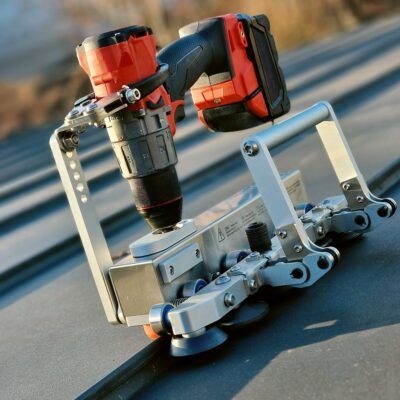
Drill-Powered Seamers Are Changing the Equation
The most commonly installed concealed fastener – standing seam roof in the USA is 24ga painted steel. If you are working on 1″, 1.5″ or 2″ mechanical lock job that is using 24ga painted steel, you are eligible to work with a cordless power seamer. These seamers are capable of working on a wide variety of materials like Copper, Steel, Aluminum, Galvalume, Zinc. Owning one of these machines has considerable advantages over renting full size traditional, corded power seamers.
Why Owning a Seamer Can Make More Sense Than Renting
If you are a standing seam roofer by trade, you will inevitably run into situations that require you to work on mechanical lock standing seams. Architectural projects that involve radius roof panels, or lower slope roofs often require the use of mechanical lock panels. There are pros & cons to both renting and owning a machine.
Rental Pros:
- Your machine will be specific for your roof panel
- Do not need to commit to one profile machine
Rental Cons:
- You have no equity in a machine for future projects
- Lead times can be long
Owning Pros:
- Less expensive over multiple projects
- No lead time – start immediately
Owning Cons:
- Less Flexibility if your profile moves to something custom or unique
- Maintenance over time
Who Should Consider Buying a Drill-Powered Seamer?
If standing seam is your profession, I believe you should own your own power seamer. Specifically, residential metal roofers will find the drill-powered seamers are incredible lightweight choices and will make jobs go faster and easier than ever.

Renting Isn’t Going Away—but Now You Have a Choice
While I strongly suggest that you own a drill power seamer so you aren’t delayed when mechanical work arrives, renting seamers still has a place in the market. There are custom seams that may have an extra down-leg on the male profile, projects that may use very heavy clips in commercial work, or trapezoidal seams that need an industrial seamer to lock the panels together. All of these are examples of when it 100% makes sense to rent your power seamer.
The best rental company we know of in the USA is DI ROOF SEAMERS. They will identify your panel profile and custom build a machine that will work specifically for you.

Find the Right Standing Seam Seamer for Your Crew
At Stortz, we were the first company to introduce Drill Power Seamers to the USA. Over years of experience, one seamer stands out above the rest.
The Buschmann Cordless Metal Panel Seamer (aka. The Double Falzseamer) is my best choice for working with 1″ or 1.5″ mechanical lock standing seam. This machine has the strongest reputation because of its years of field use and the incredible open architecture design that makes it easy to use.
My favorite aspects of this product are
- Speed – The seamer is faster up the seam than you can move. No more waiting to catch the seamer.
- Weight – Can easily be carried up a ladder. The weight alone makes this a must-have.
- Pressure Knobs – Easily adjustable seaming pressure knobs make sure you aren’t bleeding your clips through the seam.
- Design – Easily see what each seaming wheel is doing along the way
In Conclusion:
Owning a seamer is easier than ever, but renting is sticking around as an option. If you repeatedly take on jobs that have 1″ or 1.5″ mechanical standing seams, you would be best off owning a seamer. You only need a job or two for this machine to pay off.
If you are working on commercial projects and your seams are larger with thicker clips and materials, then you may be best off renting a seamer instead.
About Us
John Stortz & Son, Inc. was founded in 1853 by the original John Stortz in Philadelphia. Currently headed by Tom, Jeff, and Sam, along with their dad and uncle; Stortz Tools continues to serve the tool industry quality specialty hand tools after over 170 years.
Related Posts


Follow us on instagram
#STORTZTOOLS

