

No products in the cart.

How to Choose the Right Sheet Metal Roll Bender for Metal Roofing
With so many sheet metal roll benders available, choosing the right tool can be confusing. Different brands, bending depths, roller configurations, and specialized applications make it difficult to know which bender is best for your work.
Fortunately, most metal roofing contractors don’t need every type of bender. Understanding a few key differences will help you select the right tools for your projects.
Why Are There So Many Different Sheet Metal Benders?
Sheet metal roll benders are designed to create consistent bends along the edges of metal roofing panels, flashing, and trim.
Unlike a traditional sheet metal brake, portable roll benders allow contractors to make bends directly on the jobsite, even on long panels that would be difficult to handle with a brake.
The reason there are so many options comes down to four main differences:
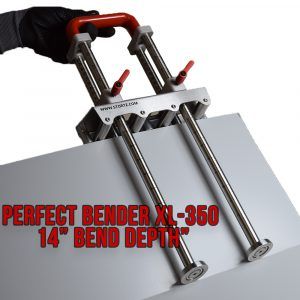
- Bending Depth: Some tools make shallow bends of just a few inches, while others can bend material 8″, 12″, or deeper.
- Single vs. Double Benders: Different roller configurations offer different levels of stability and control.
- Straight vs. Curved Bending: Some benders are designed for long, straight panels, while others are better suited for curved or radius work.
- Bending vs. Hemming: Standard roll benders create the initial bend, while hemming tools fold the metal further, often to 180°.
Understanding these differences is the first step toward choosing the right tool.
Single vs. Double Roll Benders: What’s the Difference?
One of the most common questions is whether to purchase a single or double roll bender.
Single Roll Benders
Single benders typically use one primary set of bending rollers and are compact, lightweight, and easy to maneuver.
They’re particularly useful for shorter bends, smaller pieces of flashing, and projects where portability matters.
Popular examples include the WUKO Uni Bender 2204 and Stortz Perfect Bender S-150.
Double Roll Benders
Double benders feature two sets of rollers positioned along the bending edge. The additional contact points help guide the tool and maintain a consistent bend along longer pieces of sheet metal.
These tools are particularly helpful when working with long standing seam roofing panels where maintaining a straight, uniform bend is important.
Popular examples include the WUKO Duo Bender 3202 and Stortz XL-150.
Which should you choose?
For contractors regularly bending long, straight roofing panels, a double bender is often worth the investment. For smaller flashing work, tight spaces, or occasional use, a single bender may be all you need.
Why Bending Depth Matters
Bending depth refers to the distance from the sheet metal edge to the bend line.
For example, a bender with a maximum 4″ depth can create bends up to 4″ from the material edge, while an 8″ bender provides additional flexibility for larger flashing details.
Before purchasing, consider the types of bends you make most frequently.
A contractor primarily working on standing seam panel terminations may have different depth requirements than someone fabricating larger architectural flashing.
Remember that deeper benders aren’t automatically better. Larger tools can be heavier and less convenient for small bends.
Don’t Forget About Hemming Tools
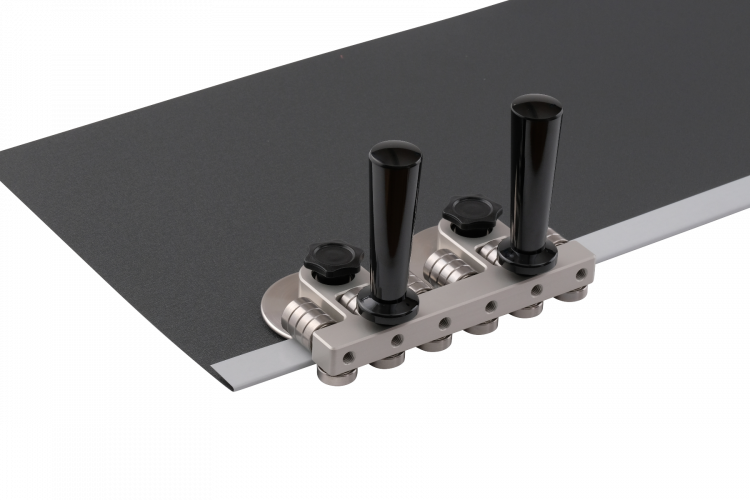
Standard benders create an initial bend of approximately 90° to 100°. A separate hemming tool then folds that bend further, creating a closed or nearly closed hem. Hems are commonly used for standing seam panel terminations, drip edges, and other roofing details.
For contractors who frequently need both operations, purchasing a bending and hemming combination is often the most practical solution.
Our Most Useful Sheet Metal Bender Combos
Rather than purchasing individual tools without a plan, consider a combination that handles the bending tasks you perform most frequently.
- Sale!

Stortz Perfect Bender Sheet Metal Tool Kit
Original price was: $1,575.00.$1,475.00Current price is: $1,475.00. Add to cart - Sale!
WUKO 2050 / 4040 Radius Bending Tool Set – Bend & Hem Curved Metal Panels
Original price was: $888.00.$852.00Current price is: $852.00. Add to cart -
Stortz XL Bend & Hem Combo | Sheet Metal Bender & Hemming Tool Set
$1,499.00 Add to cart


1. Perfect Bender Value Kit – 3 Useful Tools Cover it All
This combination pairs the Stortz Perfect Bender XL-150, the Disc Bender L & the Pocket Bender + a bonus handle
The XL-150 is our top seller and creates a 90° bend on any length panel, while the Disc Bender L finishes the 180° hem. The Pocket Bender is perfect for working on curved pieces and is particularly useful for architectural radius fascia trim.
2. WUKO 2050 & 4040 Combo – For Curved Metal Roofing
Not every roofing project involves straight panels.
For radius roofing, curved fascia, and architectural metalwork, smaller specialized benders can follow curves that would be difficult with larger tools.
The WUKO 2050 and 4040 combination provides bending and hemming capabilities for curved sheet metal applications.
3. *NEW COMBO*— XL200 + Double Disc L Hemmer – For Standing Seam Roofers
For contractors looking for a versatile bending and hemming setup, the Stortz XL combination is another option worth considering.
It’s particularly useful for roofers who frequently work with long sheet metal edges and need both bending and hemming capabilities.

Other Factors to Consider Before Buying
Before selecting a sheet metal roll bender, ask yourself:
- What material am I bending? Check the tool’s compatibility with steel, aluminum, copper, zinc, and the specific material thickness.
- Am I working with straight or curved panels? Curved applications may require specialized radius benders.
- How deep are my bends? Choose a tool that accommodates your most common flashing and roofing details.
- Do I need to create hems? If so, consider a bending and hemming combo.
- How frequently will I use the tool? Contractors using benders daily may benefit from investing in a larger, more stable model.
Frequently Asked Questions
Can a sheet metal roll bender replace a sheet metal brake?
Not entirely. Roll benders are excellent for making bends along long sheet metal edges directly on the jobsite. Traditional brakes remain useful for fabricating larger or more complex flashing profiles.
Can I use the same roll bender on steel, aluminum, and copper?
Many roll benders work with multiple roofing metals, but maximum material thickness varies by model. Always verify the manufacturer’s specifications before purchasing.
Do I need both a roll bender and a hemming tool?
If your work requires 180° hems, you’ll typically need a separate hemming tool or a specialized bender capable of completing the full bend.
Find the Right Sheet Metal Bender at Stortz
The best sheet metal bender isn’t necessarily the most expensive one. It’s the tool that matches your most common applications.
Whether you’re bending long standing seam panels, creating hems, or working on curved architectural details, Stortz offers a wide selection of professional sheet metal bending tools from WUKO, Stortz Perfect Bender, and other leading manufacturers.
Shop All Sheet Metal Roll Benders
Not sure which combination is right for your work? Contact Stortz at 215-627-3855 and we’ll help you compare your options.
About Us
John Stortz & Son, Inc. was founded in 1853 by the original John Stortz in Philadelphia. Currently headed by Tom, Jeff, and Sam, along with their dad and uncle; Stortz Tools continues to serve the tool industry quality specialty hand tools after over 170 years.
Related Posts


Follow us on instagram
#STORTZTOOLS

