

No products in the cart.
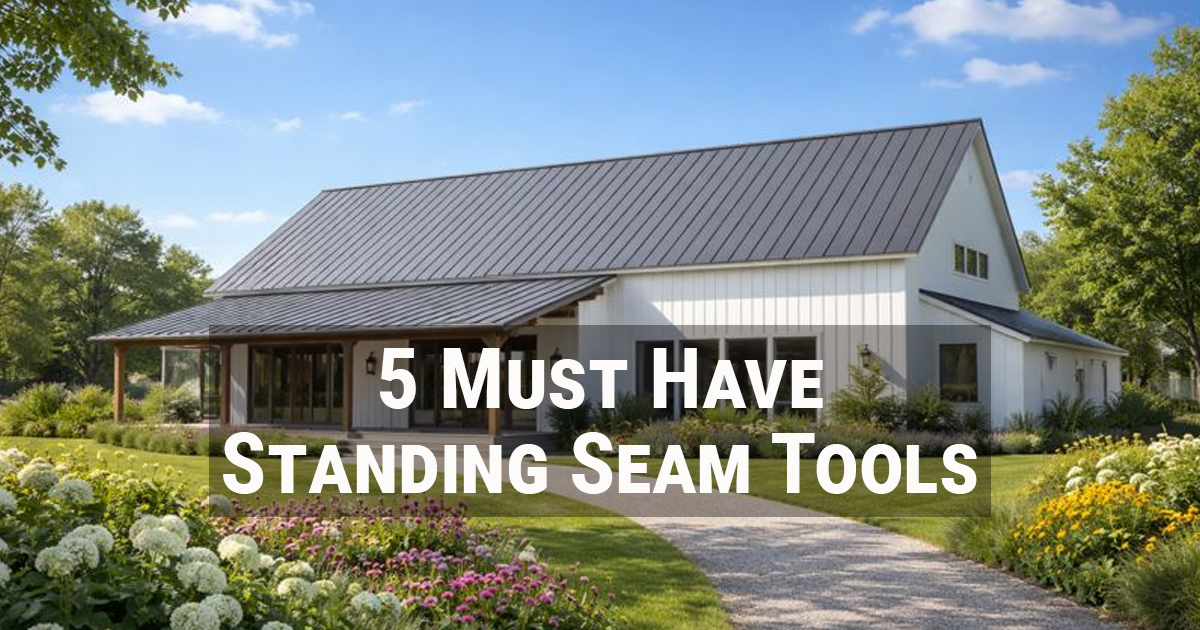
Must-Have Tools for Standing Seam Metal Roofing
What tools do I need for standing seam metal roofing?
To properly install, form, and finish standing seam metal roofing panels, you need a specialized set of standing seam tools designed for cutting, bending, shaping, and protecting metal. Using the right tools improves installation speed, seam quality, and long-term roof performance.
Below are the essential standing seam metal roofing tools every contractor should have.
Essential Standing Seam Tools You Need
1. High-Quality Metal Snips
Metal snips are one of the most basic yet critical standing seam tools. They are used for cutting metal panels, trimming flashings, and fine-detail work. It may require testing a variety of snips to determine which set works best for you specifically.
Why metal snips matter for standing seam roofing:
-
Clean cuts prevent jagged edges. Poor / jagged cuts can lead to metal tearing over time.
-
Precision cutting helps panels fit properly at eaves, valleys, and penetrations
-
High-quality snips reduce hand fatigue during repetitive cuts.
Best practice: Keep left-cut, right-cut, and straight-cut snips on hand for full versatility.
Recommendation: When working with steel metal roofing, we love the Midwest Snip Combo or the Bessey Ideal Snip Combo. These snips give additional leverage with a double fulcrum to make smooth cutting easier.

Midwest Offset Snip Combo (left and right)
2. Sheet Metal Pliers (Offset and Straight)
Sheet metal pliers are indispensable standing seam metal roofing tools used for gripping, bending, and adjusting metal. Depending on how much prefabrication you have on-site bending needs will vary.
Types you need:
-
Straight sheet metal pliers: Ideal for straight bends and firm gripping
-
Offset sheet metal pliers: Allow bending and seam work without hitting your knuckles on the panel surface. Gives you ability to bend in a variety of positions.
These tools are especially useful when forming hems, adjusting seams, or working in tight areas.
Recommendation: This 3pc Seaming Plier Combo gives you great versatility with a straight deep depth plier, a 45°, and a 90° plier. If you are working on a tighter budget, try the Fairmont Tongs (Straight & Offset)

Stortz 3pc Plier Combo
3. Drip Edge Folding Tool
A drip edge folding tool ensures clean, uniform bends along roof edges – something that’s difficult to achieve consistently by hand. The durability and handle style of your bender will make a big difference in the ease of usage on the job-site.
Why this standing seam tool is important:
-
Produces professional, repeatable drip edge folds. It will eliminate crip marks from trying to do this with a small pair of seaming pliers.
-
Saves time compared to manual bending
-
Prevents metal distortion and overworking
This tool is also versatile if you end up needing it for longer bends on trim work or valley pieces.
Recommendation: Our favorite bender choice is the ESE Drip Edge Bender, available in 3 different widths 16″, 18″, 20″. Just match the closest size to your panel exposure and you are good to go.
Bonus: Pair with the Stortz PVC Drip Edge Locker to get the most professional, scratch free results every time.


4. Metal Roll Bender
A roll bender is a must-have standing seam tool for creating smooth curves and custom profiles in metal roofing panels and trim. This may be one of the more costly tools in your arsenal, but it will be completely necessary on every job. Most commonly the roll bender will be used to fabricate the edge panels on your roof and tie into your trim style of choice. Stortz Tools was one of the first companies to introduce these tools to the USA metal roofing market. We have seen many brands and have our opinions on what works best for your application!
Uses for a roll bender in standing seam roofing:
-
Forming curved drip edges
-
Shaping fascia, soffit, and custom trim
-
Creating smooth, controlled bends without kinks
Recommendation: The Stortz Perfect Bender XL-150 is our go-to bender for 90% of bending needs. Stortz Tools was one of the first companies to introduce these tools to the USA metal roofing market. We have seen many brands and are happy to help you find the perfect bending for your application. Just call us at 215-627-3855.

5. Soft-Faced Mallet
A soft-faced mallet is a simple but critical standing seam metal roofing tool used for alignment and fine adjustments.
Why it’s important:
-
Helps seat panels and trim without scratching coatings
-
Allows controlled force when setting seams
-
Prevents dents caused by steel hammers
Soft-faced mallets protect both the metal and the finished appearance of the roof.
Recommendation: Try a wedged shape hammer like the Stubai Wedged PVC Hammer and pair it with a smaller, denser hammer like the Soft Face Dead Blow Hammer to have a good variety on your jobsite.

Bonus Standing Seam Tool: High-Quality Gloves
While often overlooked, gloves are one of the most important metal roofing tools for safety and control. Gloves should be thin enough to easily handle and manipulate metal details, but sturdy enough to keep from getting poked through leading to injury.
Look for gloves that offer:
-
Cut resistance for sharp metal edges
-
Good grip for handling panels
-
Enough dexterity for detailed seam work
Protecting your hands improves both safety and productivity on standing seam installations.
Recommendation: Sheet Metal Craftsmen Gloves – or if you are in very cold climates, try the TOWA Powergrab Gloves
Summary: What Tools Do You Need for Standing Seam Metal Roofing?
To install standing seam metal roofing correctly and efficiently, you need the following standing seam tools:
-
High-quality metal snips
-
Sheet metal pliers (offset and straight)
-
Drip edge folding tool
-
Roll bender
-
Soft-faced mallet
-
Bonus: Durable, cut-resistant gloves
Using professional-grade standing seam metal roofing tools ensures better seams, cleaner details, and longer-lasting roofs.
Standing Seam Metal Roofing Tools – FAQ
What tools do I need for standing seam metal roofing?
To install standing seam metal roofing correctly, you need specialized standing seam tools designed for cutting, bending, shaping, and finishing metal panels. Essential tools include metal snips, sheet metal pliers, a drip edge folding tool, a roll bender, and a soft-faced mallet.
Why are specialized standing seam tools important?
Standing seam metal roofing requires precision. Using proper standing seam metal roofing tools ensures clean seams, accurate bends, consistent trim work, and prevents damage to panels or coatings. The right tools also improve installation speed and overall roof quality.
Do I need a roll bender for standing seam metal roofing?
A roll bender is not required for every job, but it is highly recommended for standing seam projects that involve curved edges, radius work, or custom trim. Roll benders allow smooth, controlled bends without kinking the metal, which is difficult to achieve by hand.
What is a drip edge folding tool used for in standing seam roofing?
A drip edge folding tool is used to create clean, uniform bends in metal drip edge and roof edge trim. It helps produce professional results, reduces installation time, and prevents metal distortion compared to manual bending methods.
Can I install standing seam metal roofing without special tools?
While basic installations may be possible with minimal tools, professional results require proper standing seam tools. Without them, seams may be inconsistent, trim may not fit correctly, and the risk of damaging panels increases significantly.
What hand tools are most commonly used for standing seam metal roofing?
The most commonly used hand tools for standing seam metal roofing include:
-
High-quality metal snips
-
Straight and offset sheet metal pliers
-
A soft-faced mallet
-
Cut-resistant gloves
These tools are used daily for cutting, bending, adjusting, and aligning metal panels and trim.
Are gloves necessary when working with standing seam metal roofing?
Yes. Gloves are an essential safety tool when working with standing seam metal roofing. They protect against sharp edges, improve grip when handling panels, and reduce hand fatigue during long installations.
About Us
John Stortz & Son, Inc. was founded in 1853 by the original John Stortz in Philadelphia. Currently headed by Tom, Jeff, and Sam, along with their dad and uncle; Stortz Tools continues to serve the tool industry quality specialty hand tools after over 170 years.
Related Posts
Sorry, we couldn't find any posts. Please try a different search.
Follow us on instagram
#STORTZTOOLS

